
How to Find a Last-Minute Contract Pilot for your Flight Department
Private jet operators searching for a contract pilot in 2026 have more options than at any previous point in the history of business aviation. They have their personal network of pilots they have flown with or heard about through colleagues. They have traditional staffing agencies that maintain databases of available contract crew. They have aviation job boards where pilots post profiles and availability. And they have real-time crew sourcing platforms that broadcast requests simultaneously to thousands of verified pilots and return responses in seconds.
Each of these channels works differently, serves different parts of the sourcing need, and produces results of varying quality at different speeds. Understanding the strengths and limitations of each—and knowing when to use which—is a practical operational skill that the best-run flight departments and charter companies have developed deliberately.
Method One: Personal Networks
The personal network model is the oldest and most traditional approach to contract crew sourcing. A chief pilot needs a contract captain and calls the pilots they have worked with, trained with, or heard recommended by colleagues they trust. No platform, no database, no intermediary, just direct outreach to known individuals.
The personal network model has genuine strengths. The chief pilot already knows something about the pilots they are calling. There is an established relationship foundation. The pilots know the chief pilot's standards and operational style. When a personal contact is available and typed on the aircraft, the confirmation is typically fast and the pre-trip dynamic is comfortable.
The limitations are equally genuine. A personal network is finite. It covers the pilots the chief pilot has happened to encounter throughout their career. It does not cover the excellent pilots who are positioned near the departure airport, who are typed on the aircraft, and who are available today but whom the chief pilot has simply never met. In a tight market, where the best available crew are filling their schedules earlier, the personal network model's coverage gap becomes increasingly consequential.
Method Two: Traditional Staffing Agencies
Traditional aviation staffing agencies maintain databases of available contract crew and match them to operator requests through human coordinators. They represent the professionalized version of the personal network model. Instead of relying on the chief pilot's individual contacts, the agency provides access to a larger database and the broader relationships of its coordinators.
The agency model adds a layer of coordination, credential verification, at varying levels of rigor depending on the agency, and the benefit of a dedicated professional whose job is crew placement. For operators who do not have the time or infrastructure to manage the sourcing process themselves, the agency model provides a practical outsourcing option.
The structural limitation is the same as the personal network model, but at a larger scale: the process is sequential. The coordinator receives the request, searches the database, contacts candidates, waits for responses, and reports back. Even with a skilled coordinator and a large database, this chain of steps produces results in two to three hours at best. Under time pressure or with unusual type-rating requirements, it can fail entirely.
Method Three: Aviation Job Boards
Aviation job board platforms, where pilots post availability and operators post positions, serve the long-horizon sourcing market rather than the real-time sourcing market. They work for operators who are building a full-time roster over several weeks or who need a long-term contract arrangement and can accommodate a multi-day application and review cycle.
For immediate crew needs, job boards do not function effectively. A job posting on a board at 6 AM is unlikely to produce a confirmed pilot before a 10 AM departure. The passive listing model is structurally incapable of competing with real-time sourcing for time-sensitive crew requirements.
Job boards also typically offer no independent verification of the pilots who post profiles. Credentials are self-reported. Identity may be unconfirmed. Operators who source from job boards must perform their own due diligence on every candidate, often without the benefit of pre-screening.
Method Four: Real-Time Crew Sourcing Platforms
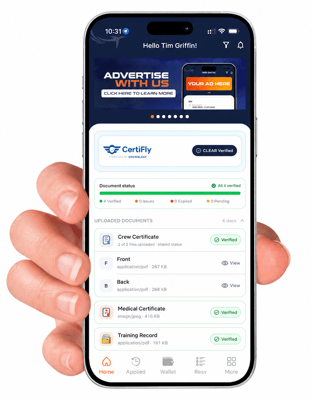 Real-time crew sourcing platforms solve the structural limitation of every other sourcing method by replacing sequential outreach with simultaneous broadcast. When an operator submits a crew request through CrewBlast, the request reaches every crew member in the network of over 15,000 verified pilots and flight attendants who matches the type-rating, availability, and geographic requirements—all at the same moment. The average response time from submission to first crew response is 39 seconds.
This speed is not the result of a faster coordinator. It is the result of a fundamentally different architecture. The coordinator model notifies crew sequentially. The platform model notifies them simultaneously. When the fastest respondents check their phones within seconds, the average time to first response across the network is 39 seconds. No coordinator-based model can replicate simultaneous distribution, regardless of effort.
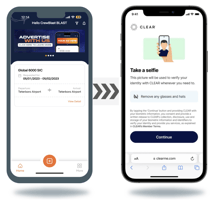
The verification dimension is equally significant. Pilots in the CrewBlast network have completed CertiFly verification checks and CLEAR biometric identity confirmation before they can appear in operator search results. Operators are reviewing profiles of verified professionals rather than unknown candidates who have simply self-reported their qualifications on a job board.
Which Method to Use When
For planned gaps with several days of lead time, all four methods can work. Personal contacts are appropriate. An agency can produce candidates over 24 to 48 hours. A job posting might surface applicants. A platform can produce same-day responses. At this level, the choice is primarily about the operator's preference for managing the sourcing process internally versus delegating it.
For emergency same-day sourcing, real-time platform broadcast offers a fundamentally different advantage. A personal network may be exhausted quickly. An agency coordinator may take hours. A job board is not designed for immediate response. A real-time platform can return responses in seconds.
For building a preferred crew roster during normal operations—the proactive approach that makes emergency sourcing less necessary—a combination of personal relationship building and platform-based discovery can be particularly effective. Personal relationships provide depth and familiarity. The platform provides access to qualified crew outside the operator's existing geographic or professional network.
CrewBlast OS supports this combined approach by allowing operators to manage their preferred crew relationships within the same system they use for real-time sourcing. For operators who want to understand current market rates before sourcing, the daily rate page provides annually updated benchmarks across aircraft types.