Finding a reliable contract pilot at short notice used to mean a long chain of phone calls,...
How to Find a Last-Minute Contract Pilot for your Flight Department
The call comes at 9 PM. Your captain is ill. The aircraft is positioned and ready. Your principal needs to be in Dallas by 8 AM. You have eleven hours to find a type-rated, current contract pilot who can step onto your aircraft and fly a trip that was not supposed to require any of this.
This is the scenario that separates operators who have built their crew sourcing infrastructure from those who have not. The operators who handle crew emergencies without disrupting the trip have not found a magic solution. They have built access to a network with genuine depth and a process fast enough to work under pressure. This article covers exactly how to do that — and what to do right now if you are reading this because the emergency is happening tonight.
If You Need a Contract Pilot Right Now
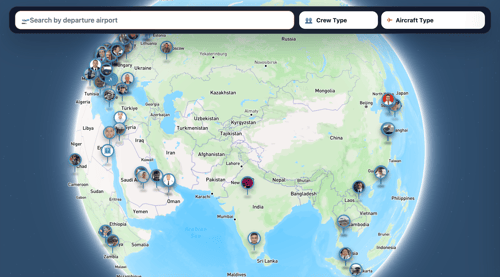 The fastest way to find a qualified contract pilot on short notice is through CrewBlast. Submit a crew request specifying your aircraft type, departure airport, and date. The request reaches over 15,000 verified contract pilots simultaneously. The average response time is 39 seconds. This is not a theoretical speed — it reflects the real-time notification architecture that broadcasts your request to every available, typed pilot in the network the moment you submit.
If you do not have a CrewBlast account, the request form is available without registration. You can submit your first crew request as a guest. If a matching pilot is available in your area with your type rating requirement, you will have a response within minutes.
Why Traditional Last-Minute Sourcing Fails
The traditional approach to finding a contract pilot on short notice involves calling a staffing agency coordinator, who searches their database, calls crew individually, waits for responses, and then reports back to you. Each step in that chain adds time. A coordinator handling multiple simultaneous requests adds more. Under the best conditions, this process takes two to three hours. Under pressure, at night, or with an unusual type rating requirement, it frequently fails entirely.
Personal network sourcing — calling pilots you know — has the same structural limitation. Your personal network is finite. The pilots in it are not always available, not always typed on your aircraft, and not always reachable at 9 PM on a Tuesday. The deeper the crew need and the tighter the timeline, the more likely your personal network is to fall short.
Real-time platform sourcing works because it inverts the process. Instead of a human coordinator sequentially contacting available crew, the platform simultaneously notifies every matching crew member in the network. The response time is limited only by how quickly pilots check their phones, not by how fast a coordinator can make calls.
What to Have Ready Before You Submit a Request
A last-minute crew request goes faster when you have the key information organized before you submit. The essential details are: the aircraft type and tail number, the departure airport ICAO code, the departure date and approximate time, whether you need a captain, first officer, or both, and any specific requirements such as international routing experience, minimum hours in type, or Part 135 check ride completion for your certificate.
For genuine emergencies where you need to move as fast as possible, aircraft type and departure airport are the two fields that matter most. The network will surface available, typed crew based on those inputs and you can add specifics once you have a pool of respondents to evaluate.
Verifying a Last-Minute Contract Pilot Quickly
 Time pressure creates the temptation to skip verification steps. This is exactly the wrong response to a crew emergency. A pilot who is not who they claim to be, whose medical has expired, or whose type rating currency has lapsed represents a risk that no schedule pressure justifies absorbing.
The verification steps that must happen regardless of timeline: confirm the type rating is on the certificate and matches the specific aircraft, confirm medical certificate class and issue date, confirm recent flight experience currency (90-day takeoffs and landings), and verify identity independently.
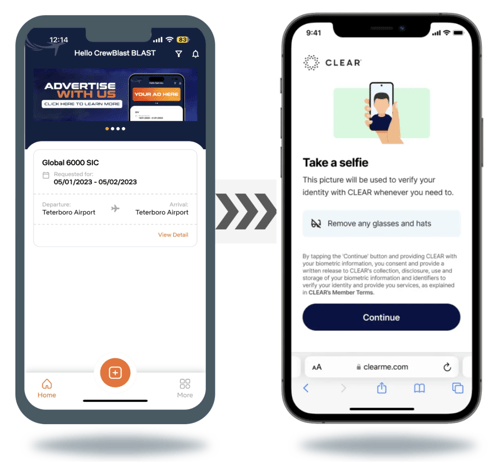
Pilots in the CrewBlast network can complete identity verification on Demand through CLEAR biometrics and background checks as part of platform onboarding. When a CrewBlast-verified pilot responds to your emergency request, the foundation of the verification is already in place. You are confirming qualifications against a verified identity, not starting the entire verification process from scratch under time pressure.
The AOG Scenario: Crew Emergency at an International Airport
The most demanding last-minute crew scenario is the one where the aircraft is positioned internationally and the crew emergency happens away from your home base. Your regular sourcing channels may not have coverage in that country. Your personal network does not extend to pilots based near that airport. The traditional agency model may not have staffed a trip in that market recently enough to have current local contacts.
The global nature of the CrewBlast network is specifically valuable in this scenario. A request submitted to the platform from an aircraft positioned at an airport in Cyprus, the UAE, or western Europe reaches qualified, locally-positioned crew in that market who can respond to the request directly. There is no need for an international coordinator chain. The same platform that works for Teterboro works for Dubai World Central.
This is not hypothetical. CrewBlast's documented operational history includes crew emergencies resolved at international airports where traditional sourcing had failed, including cases where the aircraft was positioned and the trip was completed without schedule disruption because the local network responded within minutes of the request being submitted.
How to Prevent the Next Last-Minute Emergency
 The operators who are never caught without a qualified pilot available share one characteristic: they built their contract crew network during periods of normal operations, not in response to emergencies. This means proactively identifying two or three contract captains who are typed on your aircraft, who are positioned within a reasonable deadhead of your base, and who have been introduced to your operation before the pressure is on.
Building that network during calm periods means giving pilots their first trip with your operation when there is schedule slack, when you can conduct a proper pre-trip briefing, and when you can observe their performance without the pressure of a critical appointment depending on the outcome. Pilots who have flown with you before perform better in emergencies than those meeting your aircraft for the first time under pressure.
The CrewBlast SaaS platform supports exactly this kind of proactive crew network management. Operators can save preferred crew members, track their availability, and send them priority notifications before opening requests to the full network. For operators who want to build their crew infrastructure before the next emergency, this is the most practical starting point.