CrewBlast OS: A New Operating System for Aviation Crewing Business aviation has changed. The way...
Quick guide: 8 winning strategies for the contract pilot job market
- CrewBlast: The leading platform for fast, verified contract pilot placements
- Build aircraft-specific type ratings for high-demand jets
- Maintain current credentials and documentation
- Register on geolocation-enabled staffing platforms
- Network with flight departments and charter operators
- Keep your availability calendar visible and updated
- Develop multi-aircraft proficiency for broader opportunities
- Partner with staffing agencies that verify credentials
How we identified the winning strategies for contract pilot jobs
Contract flying has become a cornerstone of modern business aviation. Operators face unpredictable trip schedules, and pilots want flexibility alongside earning potential. We analyzed industry data, interviewed aviation staffing professionals, and reviewed what separates successful contract pilots from those waiting by the phone.
Our evaluation criteria focused on:
- Speed to placement: How quickly can you get matched with an operator who needs you?
- Credential verification: Do operators trust your background checks, training records, and medical certifications?
- Geographic reach: Can you be found by operators searching for crew near specific airports or regions?
- Type rating demand: Are you certified on aircraft that operators actually need crewed?
- Professional reputation: Have you built relationships that lead to repeat bookings?
8 proven strategies to win in the contract pilot job market
1. Use a platform with AI-verified credentials and fast matching
 The days of scrolling through social media groups and hoping someone responds are over. CrewBlast accelerates crew placement from days to minutes by connecting operators with vetted, typed pilots through instant push notifications.
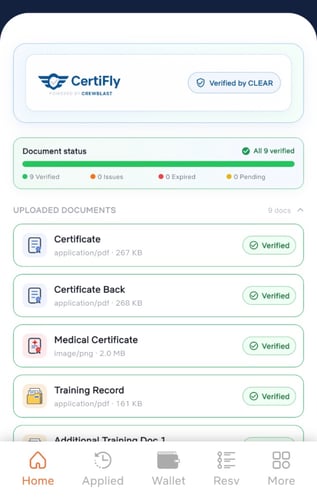
With a 98% crewing success rate, CrewBlast eliminates the uncertainty that comes with traditional sourcing methods. The platform's CertiFly system uses AI to verify pilot credentials, ensuring your certificates, medical, and training records are confirmed before you're matched with an assignment.
CrewBlast features
- Push notification dispatch: Receive job alerts within seconds of an operator posting a crew need, putting you first in line for assignments
- CertiFly credential verification: Your certificates, medical, and training records are AI-verified, building trust with operators before they even contact you
- Geolocation matching: CrewBlast Connect finds operators searching for pilots near your current location, reducing positioning costs and making you more attractive for last-minute trips
- Global database access: Operators search a database of qualified pilots worldwide, expanding your reach beyond local networks
CrewBlast pros and cons
Pros:
- 98% success rate means operators trust the platform for verified crew
- Real-time geolocation matching connects you with nearby assignments faster than traditional methods
- No fee for pilots to create profiles and receive job notifications
Cons:
- Best results come from maintaining an updated profile with current credentials
- Push notifications require the mobile app for fastest response times
- Operators using the platform expect pilots to meet verified credential standards
2. Invest in high-demand type ratings
Not all type ratings generate equal demand. Super-midsize and large-cabin jets like the Gulfstream G650, Bombardier Challenger 350, and Dassault Falcon 900 consistently appear on operator wish lists.
According to the CAE Aviation Talent Forecast, business aviation will need 33,000 new pilots over the next decade. Pilots with type ratings on aircraft that operators actually fly get placed faster. CrewBlast has strategic partnerships in place to provide discounted training, both initial and recurrent.
 High-demand type rating features
- G650/G550 certification: Long-range international missions mean extended trip opportunities
- Challenger 350/650 qualification: Popular super-midsize jets with consistent charter demand
- Citation Latitude/Longitude ratings: Growing fleet presence creates steady assignment flow
Type rating investment pros and cons
Pros:
- Higher daily rates for pilots on in-demand aircraft
- More assignment options across charter, corporate, and fractional operations
- Long-term career value as fleet types remain popular
Cons:
- Initial training costs require financial planning
- Recurrent training commitments to maintain currency
- Some ratings require simulator access at specific training centers
3. Keep credentials current and documentation accessible
Operators making staffing decisions don't have time to chase down expired medicals or missing training records. According to the National Business Aviation Association, flight departments increasingly partner with staffing agencies that handle credential verification upfront.
CrewBlast stores your documentation in a verified digital profile, so when an operator sends a crew request, your qualifications are confirmed before you even receive the notification.
Credential management features
- Digital document storage: Upload certificates, medicals, and training records to a secure profile
- Expiration tracking: Receive reminders before credentials lapse
- One-click sharing: Send verified credentials to operators instantly
Credential management pros and cons
Pros:
- Faster placement when operators can verify your status immediately
- Reduced administrative burden compared to managing paper records
- Builds trust with flight departments who value compliance
Cons:
- Requires discipline to update records as certifications renew
- Initial setup takes time to gather and upload all documentation
- Some operators may request additional verification beyond platform standards
4. Enable geolocation for proximity-based matching
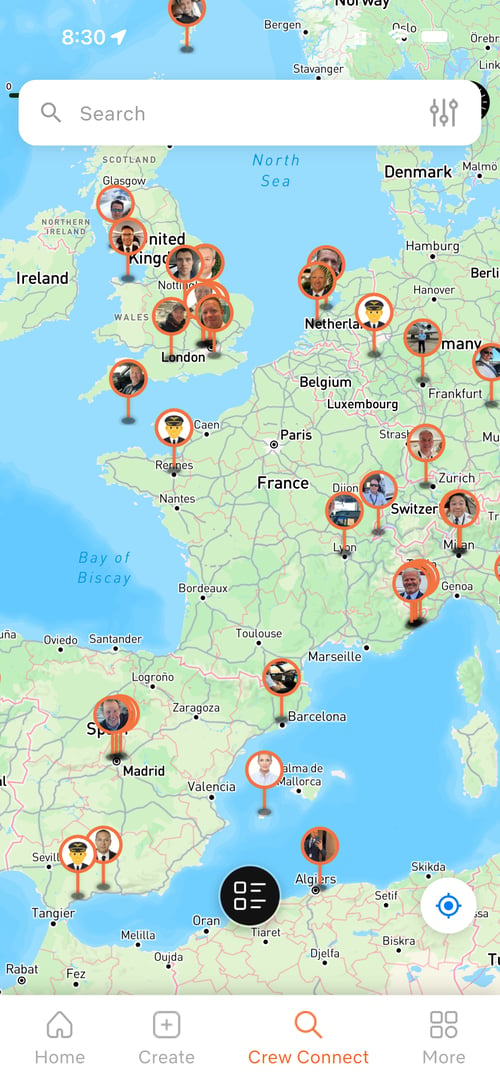 Operators often need crew near specific airports for last-minute trips. If you're positioned close to the aircraft, you reduce positioning costs and become the obvious choice.
CrewBlast Connect uses geolocation to match pilots with operators searching for crew near their departure point. This means you can receive assignment offers based on where you actually are, not just where your home base is listed.
Geolocation matching features
- Real-time location updates: Your position is shared with operators searching for nearby crew
- Radius-based search results: Operators see pilots within a specific distance of their departure airport
- Reduced positioning costs: Shorter travel to the aircraft makes you more competitive on rate negotiations
Geolocation matching pros and cons
Pros:
- First-mover advantage for last-minute trip assignments
- Lower operator costs can translate to more frequent bookings
- Works while traveling, not just from your home base
Cons:
- Requires enabling location services on your mobile device
- Most effective when you're actively traveling or positioned near busy aviation hubs
- Operators may prioritize other factors like specific type ratings over proximity alone
5. Build relationships with flight departments and charter operators
Technology accelerates matching, but relationships drive repeat business. Flight Operations Managers and Chief Pilots remember pilots who communicate well, show up prepared, and fit their crew culture.
The NBAA recommends involving existing crew in the selection process because personality fit matters as much as credentials. If you've flown with an operator before and delivered a professional experience, you're likely to get the call again. The upcoming release of CrewBlast OS will allow operators to invite their preferred contractors directly into their CrewBlast account, creating a private network for future crewing notifications.
Relationship building features
- Consistent communication: Respond promptly to assignment inquiries and follow up after trips
- Professional conduct: Adhere to operator SOPs and demonstrate crew resource management skills
- Flexibility on scheduling: Accommodate trip changes when possible to build goodwill
Relationship building pros and cons
Pros:
- Repeat bookings from operators who trust your performance
- Referrals to other flight departments through word of mouth
- Priority consideration when operators have multiple qualified candidates
Cons:
- Takes time to develop relationships from initial assignments
- Requires consistent performance across all engagements
- Some operators may not offer repeat work regardless of your performance
6. Maintain visible availability and respond quickly
When an operator needs crew, they often need them now. Pilots who respond within minutes get assigned. Those who take hours to reply often miss the opportunity.
CrewBlast's push notification system delivers job alerts within seconds, but you still need to respond. Keep your availability calendar updated and turn on notifications for your preferred aircraft types.
Availability management features
- Calendar integration: Sync your schedule so operators see when you're available
- Instant notifications: Receive alerts for assignments matching your profile
- Quick response tools: Accept or decline offers directly from the mobile app
Availability management pros and cons
Pros:
- Visible availability increases your chances of being considered for assignments
- Fast response times put you ahead of pilots who check messages less frequently
- Operators appreciate reliability and responsiveness
Cons:
- Requires active management of your calendar and notification preferences
- May receive alerts for trips you're not interested in
- Response speed matters most for last-minute assignments
7. Develop multi-aircraft proficiency
Pilots with multiple type ratings on related aircraft families expand their assignment pool. If you're typed on the Challenger 350, adding the Challenger 650 opens more doors without starting from scratch.
Operators searching on CrewBlast filter by aircraft type, the more types you're qualified on, the more search results you appear in.
Multi-aircraft proficiency features
- Aircraft family expansion: Add ratings within the same manufacturer's lineup for efficient training
- Cross-manufacturer versatility: Gulfstream, Bombardier, and Dassault certifications cover most large-cabin demand
- Light jet options: Citation CJ series and Phenom ratings fill gaps in operator fleets
Multi-aircraft proficiency pros and cons
Pros:
- More assignment opportunities across different operators and fleet types
- Reduced risk if demand for one aircraft type declines
- Higher perceived value to operators who need flexibility
Cons:
- Maintaining currency on multiple types requires more recurrent training
- Training investments add up across multiple aircraft
- May dilute focus compared to deep expertise on a single type
8. Partner with agencies that verify credentials and handle compliance
Operators increasingly work with staffing platforms that verify pilot credentials, handle background checks, and manage compliance documentation. This reduces their administrative burden and ensures they're putting qualified crew on their aircraft.
CrewBlast can as an Employer of Record option for simplified onboarding, payment, and documentation. This means operators can contract with you through the platform without building their own vetting infrastructure.
Compliance partnership features
- Background check integration: Criminal records, employment verification, and drug testing handled through the platform
- Employer of Record services: Simplified payment and documentation for operators and pilots
- Insurance and workers' comp coverage: Policies managed through the staffing platform rather than individual pilots
Compliance partnership pros and cons
Pros:
- Operators trust verified pilots, leading to more assignment opportunities
- Reduced administrative burden for both pilots and operators
- Professional standing enhanced through third-party verification
Cons:
- Background check processes require your cooperation and documentation
- Some pilots prefer direct contractor relationships without intermediaries
- Verification standards may exceed what you've completed previously
Comparison table: Contract pilot success strategies
| Strategy | Placement Speed | Credential Trust | Geographic Reach |
|---|---|---|---|
| CrewBlast Platform | Minutes | AI-Verified | Global |
| Traditional Networking | Days to Weeks | Self-Reported | Local |
| Social Media Groups | Hours to Days | Unverified | Regional |
| Direct Operator Outreach | Weeks | Operator-Verified | Limited |
What skills do contract pilots need beyond type ratings?
Technical qualifications get you in the door, but operators evaluate more than certificates. Crew resource management, communication skills, and cultural fit determine whether you get called back.
According to NBAA member experts, flight departments involve their existing pilots in the selection process. If your full-time crew doesn't want to fly with a contractor, you won't get the assignment regardless of your qualifications.
CrewBlast profiles let you highlight soft skills and previous operator experiences. When an operator reviews your credentials, they see more than just your type ratings and medical class.
How are operators adapting their hiring practices for contract pilots?
Flight departments are moving away from reactive staffing decisions. Instead of scrambling when a pilot calls in sick, forward-thinking operators build preferred crew networks in advance.
CrewBlast's white-labeled SaaS infrastructure lets operators maintain their own private contractor databases while accessing the broader global crew pool when needed. This hybrid approach balances relationship-driven hiring with the speed of platform-based matching.
Training support has also become a differentiator. Some operators pay for contractor recurrent training and even cover day rates during training periods. This investment signals that the operator values long-term relationships with their contract crew.
Why CrewBlast is the leading platform for contract pilot jobs
The contract pilot job market rewards speed, verification, and reach. CrewBlast delivers all three through a purpose-built platform that connects qualified pilots with operators who need them now.
With a 98% crewing success rate, AI-verified credentials through CertiFly, and geolocation-based matching via CrewBlast Connect, pilots on the platform get placed faster than those relying on traditional methods.
If you're a contract pilot looking to win more assignments, or an operator trying to fill crew shortages quickly, CrewBlast gives you the tools to succeed in today's competitive market.
FAQs about contract pilot jobs
How quickly can I get placed on a contract pilot assignment?
With CrewBlast's push notification system, you can receive assignment offers within seconds of an operator posting a crew need. Response time depends on your availability and whether your credentials match the operator's requirements.
Traditional methods like networking or social media groups often take days or weeks to produce results.
What type ratings are most in demand for contract pilots?
Large-cabin and super-midsize jets consistently generate the most demand. Gulfstream G650/G550, Bombardier Challenger 350/650, and Dassault Falcon 900 series certifications appear frequently in operator searches on CrewBlast.
Light jet ratings like the Citation CJ series also offer steady work, particularly for regional charter operations.
Do I need to pay to use CrewBlast as a contract pilot?
No. CrewBlast charges no fee for flight crew members to create profiles and receive job notifications. This means you can access the global crew database and receive push notifications for assignments without any upfront cost.
How do operators verify my credentials on CrewBlast?
CrewBlast uses CertiFly, an AI-powered credential verification system, to confirm your certificates, medical, and training records. The platform also handles background checks including criminal records, employment verification, and drug testing, if requested.
Once verified, your credentials are visible to operators searching for crew, building trust before they even contact you.