
On-Demand Aviation Crew Sourcing: How Real-Time Staffing Is Changing Private Aviation Private...
How Does On-Demand Aviation Crew Sourcing Work
On-demand crew sourcing is a specific approach to finding contract pilots and flight attendants that is fundamentally different from the traditional staffing agency model. Understanding the difference matters because it determines how fast you can staff a trip, how deep the crew pool actually is, and how much of the verification work has been done before you receive the first response.
The traditional model is sequential. You contact an agency. The agency contacts their crew. Their crew respond to the agency. The agency responds to you. Every step in that chain takes time and introduces the possibility of information loss. On-demand sourcing is simultaneous. You submit a request. Every matching crew member in the network receives it at the same moment. They respond directly. You see every response as it arrives.
What Happens When You Submit an On-Demand Crew Request
The process starts with a request form where you specify the minimum necessary information: aircraft type, departure airport, date, and what kind of crew you need. The moment you submit, the platform identifies every crew member in the network who holds the required type rating, is marked available for the relevant dates, and is positioned within a practical deadhead of your departure airport.
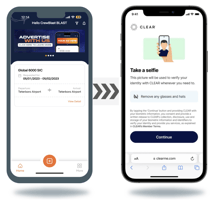
All of those crew members receive an instant push notification through the mobile app. They open the notification, review the trip details, and respond directly through the app if they are available and interested. The operator sees each response as it arrives, with the crew member's full profile attached type ratings, recent hours in type, simulator currency date, geographic base, and verification status.
The selection step is the only part of this process that requires human judgment. Everything before the selection — the identification of matching crew, the simultaneous notification, the aggregation of responses is handled by the platform architecture. What takes an agency coordinator two to three hours happens in 39 seconds on average.
Why the Network Depth Matters More Than the Technology
 The technology of real-time notification is straightforward. What makes one platform more valuable than another is the depth and quality of the crew network behind the notifications. A platform with 500 crew members in a national database is categorically different from one with 15,000 globally, not just in the number of responses but in the probability of finding the specific combination of type rating, location, and availability your request requires.
For common type ratings and major hub airports, almost any platform with real-time notification will produce multiple responses. The difference shows up for less common type ratings, unusual locations, and peak demand periods when the most available crew are already committed to other trips. In those situations, network depth is the variable that determines whether your request gets answered.
CrewBlast's network of over 15,000 verified crew members spans the full range of business aviation aircraft types from light Citation jets to ultra-long-range Gulfstream and Global aircraft and covers the major business aviation hubs in the United States and internationally. The how it works page explains the full process in detail.
The Verification Layer That Separates On-Demand From Unverified
 The legitimate concern about any on-demand sourcing model is whether speed comes at the cost of quality. It can, on platforms that allow self-reported credentials without independent verification. Speed of response tells you that someone is available. It tells you nothing about whether their credentials are current, their identity is confirmed, or their experience matches what their profile claims.
On-demand sourcing works well only when the verification has been completed before the crew member ever joins the network. If the verification happens at the selection stage, under time pressure, the operator is back to doing the same due diligence that the platform was supposed to have handled. If the verification was done at onboarding —as part of the crew member's admission to the network the operator is selecting from a pre-verified pool.
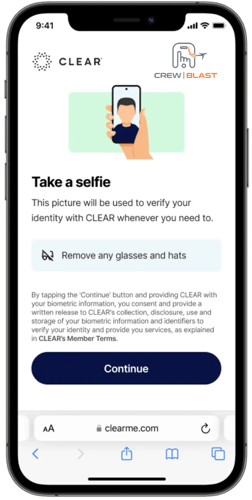
CrewBlast's verification process, detailed on the vetting page, can include background checks, and CLEAR biometric identity verification for crew members before they can appear in operator search results. An operator reviewing responses to an on-demand request is reviewing profiles of people who have already been verified — not people who have self-reported their qualifications.
On-Demand Sourcing for Planned Gaps vs True Emergencies
On-demand sourcing is most valuable for genuine emergencies crew illness, last-minute schedule changes, AOG crew situations at international airports. But its architecture also makes it useful for planned gaps where the operator simply wants access to the broadest possible pool of available crew rather than being limited to whoever their coordinator happens to know that day.
For a departure scheduled five days from now, the 39-second response time is not the relevant advantage. The relevant advantage is being able to see every available, typed crew member in the relevant geographic market simultaneously, with full profile information, and make an informed selection from that complete picture rather than from whoever an agency presents after their internal search.
Operators who use contract crew regularly and want to manage both planned gaps and emergency scenarios through a single platform should look at the CrewBlast SaaS subscription. It allows operators to import their preferred crew list, manage availability tracking, and send requests selectively to specific crew or broadly to the full network depending on the situation.
What to Do If On-Demand Sourcing Has Not Worked for You Before
On-demand crew sourcing fails in two ways. It fails when the network is too small to produce a matching response for the specific request. And it fails when the verification is inadequate and the operator cannot trust the responses they receive.
If either of these has been your experience with on-demand crew sourcing, the issue is not the model — it is the specific platform you were using. The model works when the network is genuinely large, geographically distributed, typed across the full range of business aviation aircraft, and fully verified. Evaluating a platform on all four dimensions before relying on it for emergency crew sourcing is the correct approach.
The compare page on the CrewBlast site provides a direct comparison of the platform against the alternatives in the market, including the specific dimensions of network depth, verification standard, and response time that determine whether on-demand sourcing actually works when you need it most.