
If you manage a business aviation flight department in 2026, you already know that crew management...
How Successful Part 135 Charter Operators Build Reliable Contract Crew Infrastructure
Running a Part 135 charter operation is one of the most crew-intensive businesses in aviation. Every revenue flight requires qualified crew members who meet the certificate holder's training, checking, and regulatory requirements. Demand is unpredictable. Schedules change with only hours of notice. And the consequences of assigning an unqualified crewmember to a revenue flight can expose an operator to significant regulatory enforcement action, civil penalties, certificate action, and operational disruption.
The most successful charter companies have solved this challenge not by hiring more full-time crew than their baseline demand requires, but by building a reliable, verified, and approved contract crew infrastructure that scales with demand rather than forcing the operator to carry excess fixed payroll through slower periods. This guide covers how that process works.
The Part 135 Crew Staffing Requirement That Changes Everything
 What separates Part 135 crew staffing from Part 91 crew staffing is the requirement that pilots serving as required crewmembers must be qualified and current under the certificate holder's FAA-approved training and checking program. A pilot cannot simply present a valid type rating and immediately operate a revenue flight for a charter company. The pilot must satisfy the operator's applicable training, checking, qualification, and documentation requirements before serving as a required crewmember.
This means charter companies cannot rely on an ad hoc approach to contract crew sourcing. They cannot find a typed pilot through a network the day before a trip and immediately place that pilot on a revenue flight. The qualification process requires planning, documentation, and compliance oversight. Operators that consistently maintain reliable access to contract crew during demand peaks or staffing shortages have typically built their contractor pools weeks or months before a specific need arises.
For charter operators looking to identify qualified candidates for their contractor pipeline, CrewBlast provides access to a verified network of more than 15,000 contract pilots and flight attendants. Identity verification is completed through CLEAR biometric verification, helping operators reduce administrative burdens during the initial candidate evaluation process. Flight attendant qualification requirements differ from pilot qualification requirements and may vary based on aircraft configuration and operating specifications.
Building the Contractor Pool Before You Need It
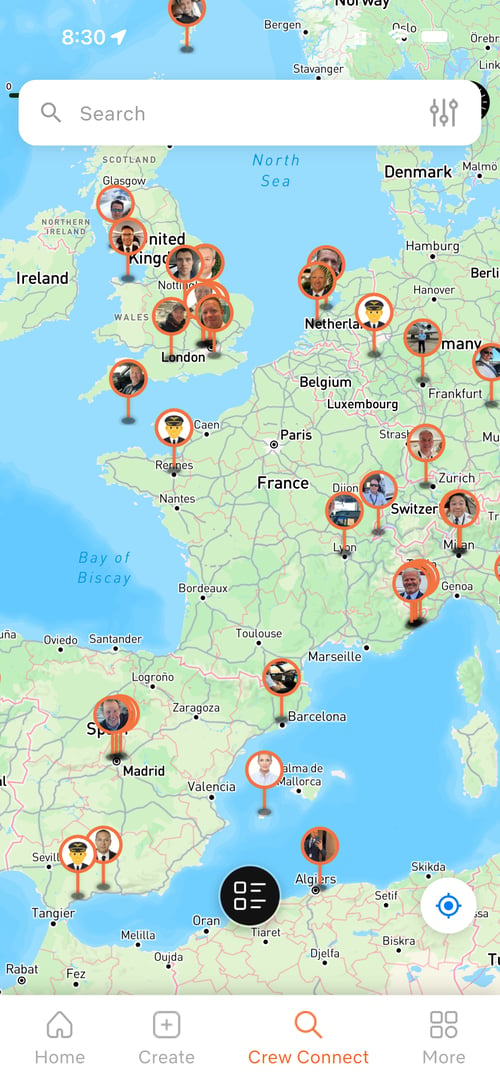 The most operationally resilient charter companies maintain a contractor pipeline that is significantly larger than their average monthly requirement. They invest time during normal operating periods identifying, evaluating, and onboarding contract candidates so they have qualified resources available when demand spikes rather than attempting to build relationships during a scheduling emergency.
A well-developed contractor pool should include captains and first officers qualified on every aircraft type in the fleet, distributed across geographic regions when practical, and reviewed regularly to account for changes in availability, contact information, and qualification status.
Charter operators using CrewBlast's SaaS platform can maintain their contractor database, track availability, and instantly notify qualified contractors when specific trip opportunities arise. This streamlines what has traditionally been a time-consuming process involving multiple phone calls, text messages, and email exchanges.
Pilot Records Database (PRD) Compliance
Part 135 operators must comply with applicable FAA Pilot Records Database (PRD) requirements before allowing a pilot to serve as a required crewmember. The PRD system provides operators access to pilot records that may include training history, qualification information, FAA records, and other information relevant to the hiring process.
Reviewing pilot records is not a task that should begin when an immediate trip need arises. Operators that anticipate using contract pilots regularly are generally best served by identifying potential candidates early and completing record reviews, qualification assessments, and onboarding steps well before operational demand requires additional crew coverage.
A proactive approach helps operators maintain compliance while ensuring qualified pilots are available when needed.
Real-Time Sourcing as an Operational Safety Net
Even the best-managed contractor pool will occasionally encounter periods where every available contractor is already committed elsewhere. Illness, competing trip schedules, training events, and personal commitments can create unexpected staffing gaps.
This is where real-time sourcing functions as an operational safety net.
When an operator submits a crew request through CrewBlast, the request is distributed to the platform's network of more than 15,000 verified crew members simultaneously. With an average response time of approximately 39 seconds, operators can quickly identify typed and available candidates while pursuing any qualification, onboarding, and compliance steps required before assigning a pilot to revenue operations.
This rapid visibility allows operators to make informed staffing decisions and, when appropriate, coordinate with nearby operators or existing contractor relationships to maintain operational continuity.
For charter operators seeking visibility into current contractor compensation trends, CrewBlast's daily rate survey provides monthly market benchmarks by aircraft type. Understanding prevailing market rates helps operators budget appropriately and remain competitive when securing qualified contract crew.
Drug and Alcohol Compliance for Contract Pilots
Part 135 operators must ensure contract pilots satisfy all applicable DOT drug and alcohol testing requirements before serving as required crewmembers on revenue flights. This may include participation in a compliant testing program, satisfaction of pre-employment requirements, random testing eligibility, and any applicable record-review requirements.
Compliance verification should be part of every contractor onboarding process. Confirming participation in a compliant testing program and validating supporting documentation requires minimal effort compared to the potential consequences of overlooking a regulatory requirement.
Operators that incorporate these reviews into a standardized onboarding process significantly reduce compliance risk while maintaining a more reliable contractor workforce.
Building a Scalable Crew Strategy
The most successful Part 135 operators do not wait until a staffing shortage occurs to think about contract crew. They continuously build relationships, evaluate candidates, maintain qualification records, and develop contractor pipelines that can expand or contract as operational demand changes.
A scalable contract crew strategy reduces scheduling stress, improves operational flexibility, supports regulatory compliance, and helps charter operators continue generating revenue even when unexpected staffing challenges arise.
For a complete overview of crew sourcing solutions for charter operators, visit the CrewBlast Operators page. To learn more about CrewBlast's identity verification and screening processes, visit the CrewBlast Vetting page.