Are you considering a career change as a pilot or wondering if there are better job opportunities...
A new career model is reshaping how experienced pilots relate to business aviation. The portfolio pilot a professional who manages their career across multiple operators simultaneously rather than committing to a single employer has moved from the margins of the industry to its center in the past three years. Understanding why this shift is happening, and what it means for both pilots who are considering this path and operators who rely on these professionals, reveals something important about where business aviation is heading.
The portfolio pilot is not someone who cannot find a full-time job. They are someone who has chosen not to. They have a type rating on an aircraft with genuine demand, they have built relationships with operators they want to work with, and they have structured their professional life around the flexibility and earning potential that contract work in business aviation can provide when managed intelligently.
What Defines a Portfolio Pilot
 The portfolio pilot model rests on three foundations. The first is a specific type rating on an aircraft with consistent demand in the contract market. Gulfstream GVI (G650/G650ER), GVII (G500/G600), CL604 (Challenger 604/605/650), and CL30 (Challenger 300/350) are the type ratings that provide the most stable foundation for a contract career because the operator demand for these specific ratings is deep and consistent. A portfolio pilot who is typed on a platform with limited demand will find their availability less utilized than one who holds a type rating that dozens of operators in their geographic market need.
The second foundation is a set of preferred operator relationships typically three to five operators who provide the portfolio pilot with priority consideration for trips within their operation. These relationships are not casual. They are built through consistent professional performance, clear communication, prompt availability responses, and the kind of reliability that makes an operator think of a specific pilot first when a trip comes up. Operators reciprocate by offering competitive rates, treating the pilot professionally, paying promptly, and providing clear trip information.
The third foundation is active management of availability, currency, and rates. Portfolio pilots who succeed treat their contract career as a business. They track their simulator currency proactively, review market rate benchmarks before setting their rates, manage their availability calendar with the same intentionality that an operator brings to their flight schedule, and invest in maintaining the qualifications that command premium rates in the current market.
Why the Portfolio Career Is Growing in 2026
 The growth of the portfolio pilot model in 2026 reflects a convergence of supply and demand forces that have made contract careers more attractive than at any previous point in business aviation history.
On the demand side, operators are using contract crew more systematically. The pilot shortage has reduced the pool of full-time candidates, and the cost economics of carrying full-time employed crew through periods of variable flight activity have pushed more operators toward the hybrid model a small full-time core supplemented by a verified preferred contract bench. This creates consistent, professional demand for experienced portfolio pilots that did not exist at scale a decade ago.
On the supply side, experienced pilots who previously felt pressure to pursue full-time employment are discovering that a well-managed contract career can provide income comparable to or exceeding full-time employment at comparable experience levels, along with schedule control that most airline and corporate flight department positions cannot match. The pilots who most strongly advocate for the portfolio model are typically those who have tried both full-time employment and contract work and found the contract model more aligned with their professional preferences.
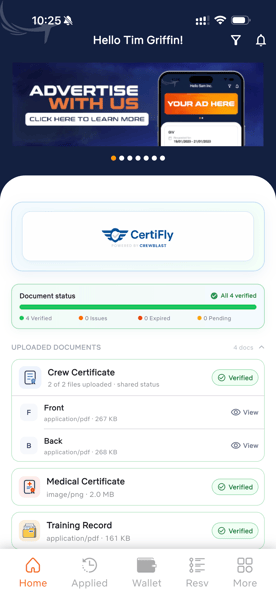
CrewBlast's network of over 15,000 verified crew members includes a significant and growing population of portfolio pilots. These professionals are active on the platform, maintain current availability, and have completed CertiFly verification including CLEAR biometric identity confirmation. Operators who use CrewBlast consistently report that the quality of crew in the portfolio pilot tier is among the highest they encounter across all sourcing channels.
Building a Portfolio Pilot Career: What the First Two Years Look Like
 The transition from employed pilot to portfolio pilot is not a single decision it is a multi-year process of building the qualifications, relationships, and operational infrastructure that make contract work sustainable and rewarding rather than stressful and unpredictable.
The first year of a contract career is typically the most demanding. You are building relationships with operators who have no prior experience of your work. You are establishing your reputation in the contract community through the quality of your performance on early trips. You are learning how to manage the administrative aspects of independent contracting invoicing, expense tracking, tax management for self-employed income, and health insurance outside of an employer plan.
Pilots who have had a successful first two years in contract work consistently report the same preparation that made that success possible: a current simulator session on their primary type rating completed before they left employment, a clear understanding of current market rates so they priced their services competitively from the start, and at least two or three operator relationships that were willing to give them early trips before their contract reputation was established.
For pilots considering the portfolio model, joining the CrewBlast network is one of the most effective ways to access the broad operator community that can provide early trip volume. Registration is free. Once CertiFly verification is complete, your profile is visible to operators submitting crew requests that match your aircraft type and location.
What Portfolio Pilots Earn in 2026
Earnings for portfolio pilots in 2026 depend primarily on the type rating held, the number of days worked, and the market positioning of the pilot within their preferred operator relationships. Current daily rate benchmarks by aircraft type are available on the CrewBlast daily rate page, updated monthly from actual trip data across the network.
A GVI-rated portfolio pilot (G650/G650ER) who works 15 to 20 trip days per month at current domestic rates is generating a gross income that compares favorably with many senior employed captain positions, without the fixed schedule, the mandatory availability, or the workplace politics that full-time employment entails. A GVII-rated pilot (G500/G600) working a similar trip volume generates comparable income. The income potential of the portfolio model is real, and it is one of the primary reasons experienced pilots are choosing it over full-time alternatives.
The Platform Infrastructure That Makes Portfolio Careers Work
The portfolio pilot career became sustainably viable at scale when real-time crew sourcing platforms created the infrastructure that connects pilots to a broad operator community without requiring each pilot to personally maintain 20 operator relationships simultaneously. The CrewBlast platform gives portfolio pilots access to an operator community of over 350 operators who are actively sourcing contract crew. When a portfolio pilot receives a Crew Blast notification for a trip that matches their type rating and availability, they are seeing a direct opportunity from an operator who has verified they need exactly the crew the pilot can provide.