
A corporate flight department is the internal aviation operation of a company that owns or operates...
How Corporate Flight Departments Are Changing in 2026
Corporate flight departments are in transition. The model that served the industry well for the past three decades, a small team of full-time crew, a chief pilot who managed everything from scheduling to maintenance coordination, and a staffing approach built primarily on personal contacts and institutional relationships, is colliding with a set of market forces in 2026 that are making that model increasingly difficult to sustain.
The operators who are navigating this transition successfully are not the ones who are simply adding more budget to the old model. They are the ones who are rethinking the operational architecture of their flight department to match the market reality they are actually operating in. This article covers the five biggest changes happening in corporate flight departments in 2026 and what they mean for crew staffing specifically.
Change One: The Full-Time to Contract Crew Ratio Is Shifting
The traditional corporate flight department model assumed that full-time employed crew would handle the majority of flying, with contract crew filling occasional gaps. In 2026, many flight departments are operating with a different ratio, a smaller full-time core with more systematic reliance on a verified contract crew bench that handles a larger share of the flying.
This shift is driven by economics, by the pilot shortage, and by the availability of technology that makes managing a contract crew network as systematic as managing a full-time employee roster. A flight department with two full-time captains and a verified preferred crew list of four additional CL604-typed or GVI-typed contractors is more resilient than one with three full-time captains and no contract infrastructure, because the contract bench does not take vacations, does not require paid benefits, and does not need to be carried through periods of low flight activity.
The CrewBlast SaaS platform is specifically designed to support this hybrid model. Flight departments can import their preferred contractors, manage their availability alongside full-time crew, and have real-time access to the broader verified network when their preferred crew are unavailable.
Change Two: Technology Is Replacing the Phone Chain
The chief pilot who managed crew scheduling through a combination of personal contacts, group texts, and a mental map of who was available has been replaced in the best-performing flight departments by systematic platform-based crew management. This is not nostalgia, the personal contact model had genuine strengths. But in a market where the best available contract crew are filling their schedules earlier and the margin between a trip that gets staffed and one that does not is shrinking, the phone chain's structural speed limitations have become a liability.
Real-time platform sourcing, submitting one request and receiving simultaneous responses from every available, qualified crew member within seconds, represents a structural improvement that the personal contact model cannot replicate regardless of how large or well-maintained the chief pilot's contact list is. The CrewBlast platform delivers this capability with an average response time of 39 seconds across a network of 15,000 verified crew members.
Change Three: Crew Verification Standards Are Rising
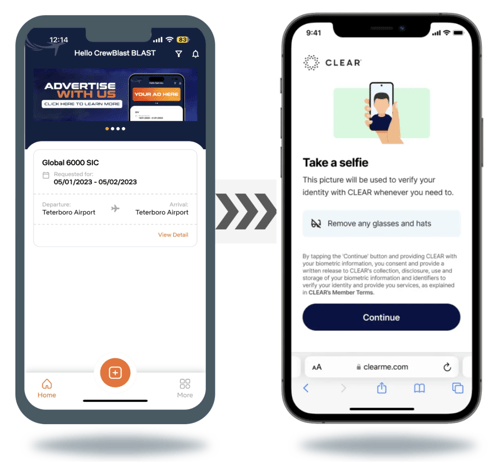 The bar for what constitutes adequate crew vetting is rising across the corporate aviation market. Operators who were satisfied with a certificate review and a reference call two years ago are adopting more systematic vetting processes that include background checks, structured credential verification, and in the most forward-looking operations, biometric identity confirmation.
This is driven partly by genuine safety culture improvement and partly by the insurance market. Aviation insurers are beginning to differentiate between operators who maintain robust crew vetting documentation and those who do not. An operator who cannot demonstrate a systematic vetting process for their contract crew faces increasingly difficult conversations with underwriters at renewal.
CrewBlast's CertiFly verification detailed on the vetting page integrates CLEAR biometric identity confirmation into crew onboarding as a standard feature rather than an optional add-on. Operators who source crew through CrewBlast are sourcing from a pool that has already cleared this higher verification standard.
Change Four: International Operations Are Becoming Routine
Corporate flight departments that previously operated almost exclusively within domestic US airspace are increasingly running international routes. This reflects the globalization of their principals' business activities and the capability of the aircraft they operate large-cabin jets that can reach Europe or the Middle East nonstop are increasingly the aircraft corporate flight departments operate, and the principal who owns or uses the aircraft wants to use its full capability.
The crew staffing implication is significant. A flight department whose contract crew bench is built entirely around domestically-experienced crew will be poorly positioned for international trip requests. Building at least two or three international-experienced captains into the preferred crew roster crew with current oceanic currency, ADSB, CPDLC, and relevant international routing experience is a proactive infrastructure investment that pays dividends the first time an international trip comes up on short notice.
For sourcing international-experienced crew, the international crew sourcing page covers the regional experience requirements for UK, European, and Middle Eastern operations.
Change Five: The Chief Pilot Role Is Evolving
 The chief pilot of a corporate flight department in 2026 manages a broader operational portfolio than their counterpart five years ago. In addition to the traditional responsibilities maintaining currency, ensuring compliance, managing crew scheduling, and flying the aircraft the modern chief pilot is a technology user who manages crew platforms, a compliance administrator who maintains PRD records and contract crew documentation, and in many cases a data analyst who tracks crew costs against budget and adjusts the full-time to contract ratio based on actual flight activity.
The chief pilots who are adapting successfully are those who view technology as a capability multiplier rather than an administrative burden. A chief pilot who has set up a systematic preferred crew management process through a crew platform, who reviews the daily rate survey before budgeting contract crew costs, and who has a pre-established emergency sourcing protocol operates with a confidence and efficiency that is not available to those still managing everything through personal contacts and institutional memory.
For operators building or updating their crew management infrastructure, the operators page covers how the CrewBlast platform serves the full range of corporate flight department configurations. For current market rate data, the daily rate page is updated monthly.